Tech Company AI Brainstorming Retreat Inspired Fun Ideas
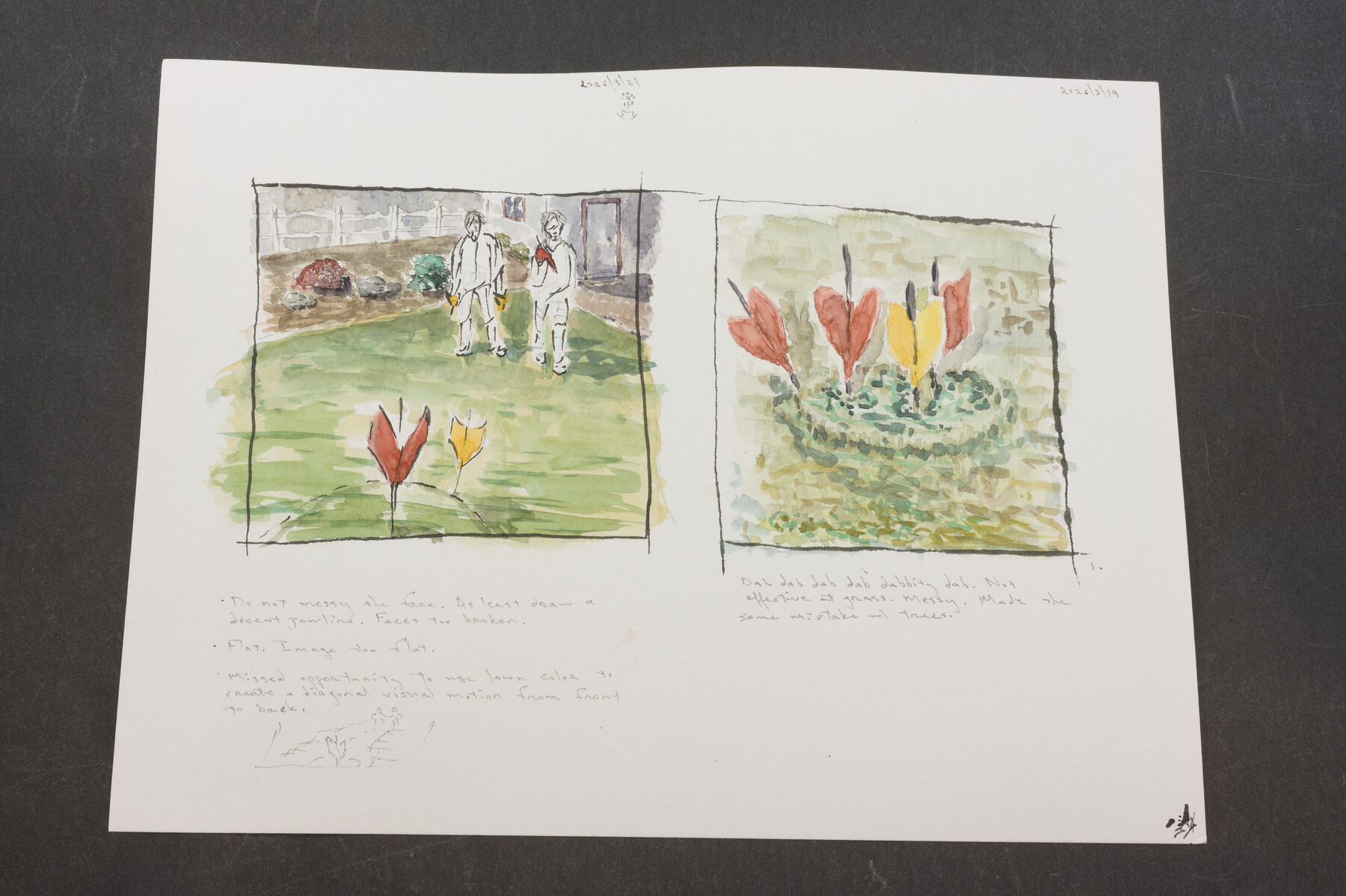
Image Credit: My Id and Ego.
Happy little lawn darts. Bob Ross was, nay, is an amazing human alive in our thoughts. Such a simple way to enjoy painting by treating mistakes as happy accidents. It's helping. Enjoyed these. Able to relax when there's no pressure. And why would I pressure myself? It's not like I'm graded on this stuff. Also memories of youth. I'm glad I didn't shoot my eye out.MENLO PARK, CALIFORNIA. March 21, 2026 (ABF Newswire) A global social media and advertising platform held a retreat over the weekend that brought together engineering teams and leadership to brainstorm new and novel uses for the company's AI system. By most accounts, the event was a success.
The stand out demo came from David Trent and Malik Mason, engineers from the company's hardware division, who brought 80s low-tech picnic fun into the future with their AI-assisted lawn dart launcher. The device incorporated the company's AI system to control the directional servos and spring-loaded launch mechanism via voice. Onboard cameras used the AI system's vision capabilities to calculate trajectory. Tell the device "target is about 5 degrees to your left, red shirt" and it'll self position, ID the target, calculate the distance, and launch a lawn dart.
"It worked great except for a small hiccup during the first trial run," recalls David. "Our system prompt was a bit off and the targeting got messed up. It was an easy fix."
The mistake in the system prompt, or the written instructions that help guide the AI's operation in addition to any additional instructions given, led to a friendly fire incident. An executive in a red shirt was erroneously targeted instead of the intended target of a mannequin in a green shirt. The word "complimentary" was mistakenly added around the word "color" in the system prompt which caused the AI to sometimes target the wrong color.
"My girlfriend is learning to paint and, I guess, the word 'complimentary' unconsciously got embedded in my head and then the system prompt," laughed Malik. "Easy mistake that spellcheck couldn't catch."
For better penetration into the dummy targets, the tips of the darts had been sharpened. The executive's death was instant when the large dart pierced his skull.
"We got lucky with the first demo slot," amused David. "There was no way another team was going to follow up after our system took out a live human."
The deceased had spent the last three years repositioning the company's advertising AI into something capable of tracking, identifying, and locking onto individual people in a crowd. The executive team loved it. Defense contractors loved it. Shareholders loved that the same models the company trained to recognize faces to show personalized car ads had applicable military uses. And he personally shepherded the reclassification of key computer vision patents as dual-use technology, which allowed the company to pursue government contracts without triggering the export review process that would have made the program public. The technology, once licensed to a foreign defense ministry with a documented record of targeting journalists and protesters, is now a line item in a procurement budget for domestic use.
"We originally thought of pitching this as an automated dog throwing toy that could track the canine and throw to her," shared Malik. "David and I thought it'd be cooler to demo with these large darts. I think we made the right call and had a strong showing."